Hammond
EMDR Therapy for Trauma and PTSD in Alberta
Stop reacting from fear and start feeling steady again. Trauma-informed EMDR and relationship-focused therapy for PTSD survivors, individuals, and couples across Alberta.
Registered Psychologist, Alberta #5299
EMDR Certified | Gottman Method Level 3
Virtual and in-person

What Happens When You Click
Fill out a short form. Just your name, phone, email, and a line or two about what's going on.
Book your free 30-minute consultation at a time that works for you.
Talk it through together. No pressure, no diagnosis on the spot, just clarity on whether this is the right fit.
You Know Something Is Off, Even When Life Looks Fine
You regulate your nervous system when someone cuts off communication so you don't spiral into crisis.
You stay steady when you're rattled by someone, then wonder why it took everything you had.
You feel valid in your trauma response, even when people around you act like it isn't a big deal.
Your body still believes danger is close even when your life is stable.
You want to convince your body that it's finally safe, even when trauma still lives in your muscle memory.
Trained and Certified in the Approaches That Actually Work for Trauma
- EMDR Certified Therapist
- Safe and Sound Protocol (SSP) Certified Provider
- Gottman Method Couples Therapy, Level 3 completed
- Master of Counselling in Counselling Psychology, Athabasca University
- Registered Psychologist, licensed by the Province of Alberta
- Also trained in CBT, Prolonged Exposure Therapy, and works with veterans and first responders
The Relationship Recovery Project
Nine steps, three phases, one path from surviving to actually feeling safe again.
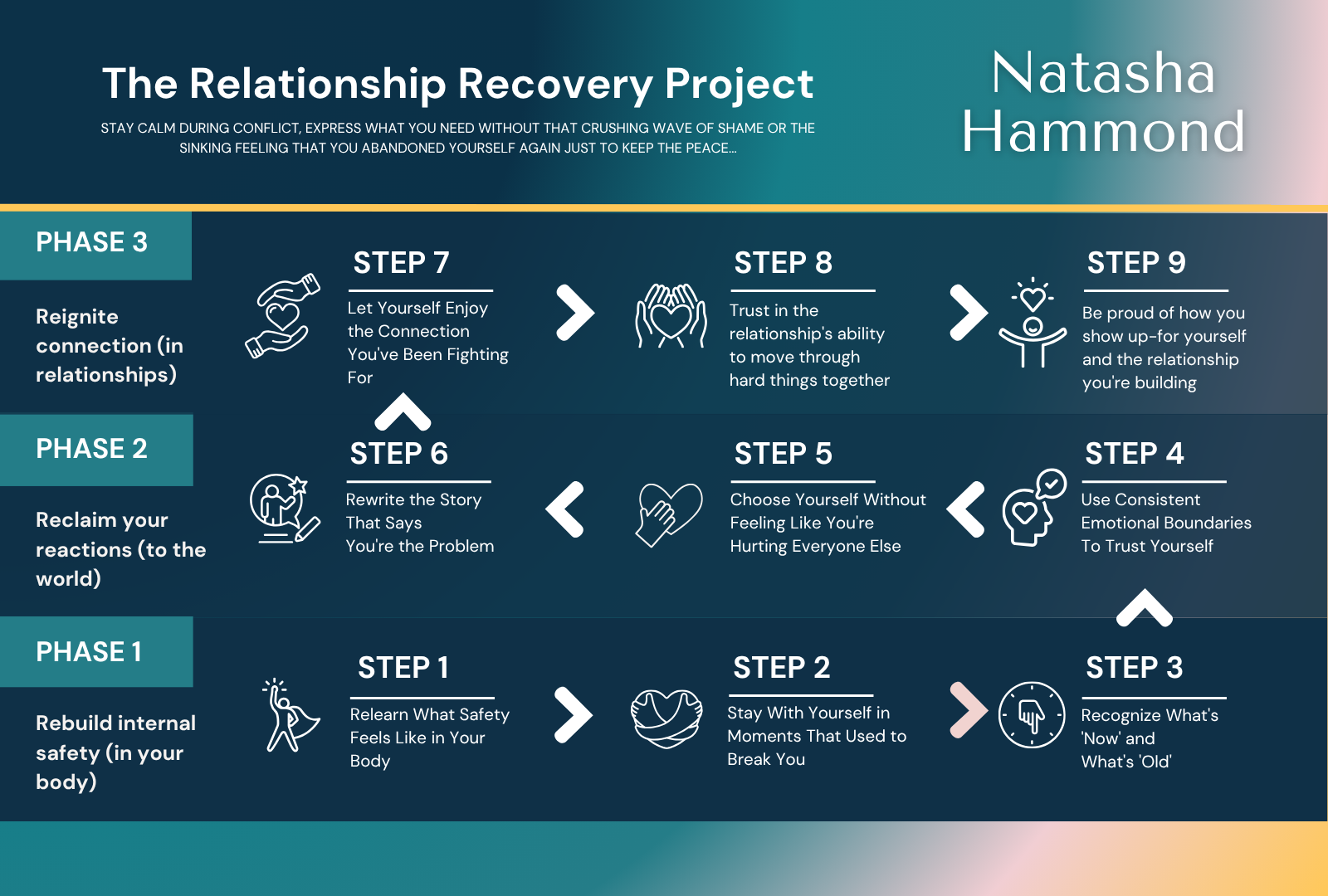
Phase 1: Rebuild internal safety in your body
Before anything else changes, your body needs to believe it's safe. This phase is about relearning what safety actually feels like.
- Relearn what safety feels like in your body
- Stay with yourself in moments that used to break you
- Recognize what's now and what's old
Phase 2: Reclaim your reactions to the world
Once your body isn't in survival mode, you can respond instead of react, and stop mistaking your pain for proof you're the problem.
- Use consistent emotional boundaries to trust yourself
- Choose yourself without feeling like you're hurting everyone else
- Rewrite the story that says you're the problem
Phase 3: Reignite connection in relationships
With safety and boundaries in place, connection stops feeling like a risk and starts feeling like something you can trust again.
- Let yourself enjoy the connection you've been fighting for
- Trust the relationship's ability to move through hard things together
- Be proud of how you show up, for yourself and the relationship you're building
You are not broken and you are not too much. Your body has been doing exactly what it learned to do to survive. This program gives you a map back to steady, so surviving can finally turn into living.
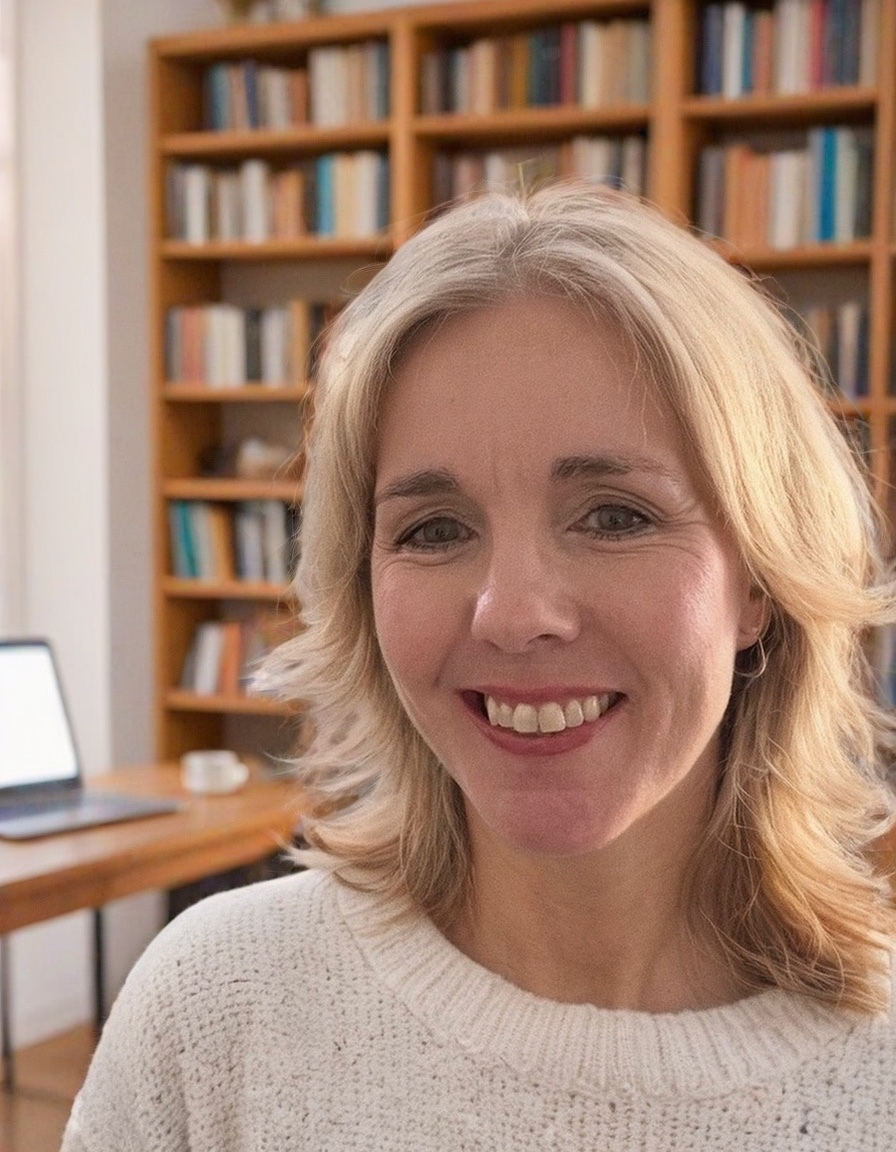
Meet Natasha Hammond, MC, RPsych
Many of the people I work with are thoughtful, capable, and used to carrying a great deal on their own. You understand what's happening but still feel unable to change how you respond, and that gap is exhausting.
I use EMDR, the Gottman Method, and CBT with individuals and couples, and I also work with veterans and first responders. My approach is warm and down to earth. We'll go at your pace, using tools that actually fit into your everyday life, not theory that stays in the therapy room.
Before You Book, You Probably Want to Know
What happens on the free consultation?
It's a free 30-minute call. We'll talk briefly about what's been going on, what you're hoping for, and whether this approach is a good fit. No pressure to book anything after.
How does the program work?
Therapy is built around the Relationship Recovery Project, a nine-step, three-phase approach that starts with regulating your nervous system, moves into how you respond to the world, and ends with rebuilding connection. Sessions are 50 to 75 minutes, weekly or biweekly depending on what you need.
Who is this for, and who is it not for?
This is for adults dealing with trauma, PTSD, anxiety, or relationship strain who are ready to stop just managing symptoms and start actually feeling steady. It's available for individuals and for couples. If you're in active crisis and need immediate support, this program isn't the right first step, please reach out to emergency services or a crisis line instead.
What if I don't even know what's wrong, I just feel off?
That's normal, and it's still a good reason to reach out. A lot of people start here without a clear name for what they're feeling. Part of the work is figuring that out together.
Is this covered by insurance, and what does it cost?
Individual sessions are
You're Not Broken. Your Nervous System Just Needs a Map Back to Safe.
This starts with a free, no-pressure consultation.
Worst case, you leave with more clarity than you had before.
Let's take the first step today. Confidentially fill out the form below and schedule some time for us to talk (FREE)...